Finals Study Schedule: Work Back From Each Exam Date
Finals study schedule: build two weeks around four exam dates, weigh classes by credits and difficulty, and leave room when plans change.
By Ultimate Student Planner by Cosmo Suite · Editorial policy
Published · 7 min read
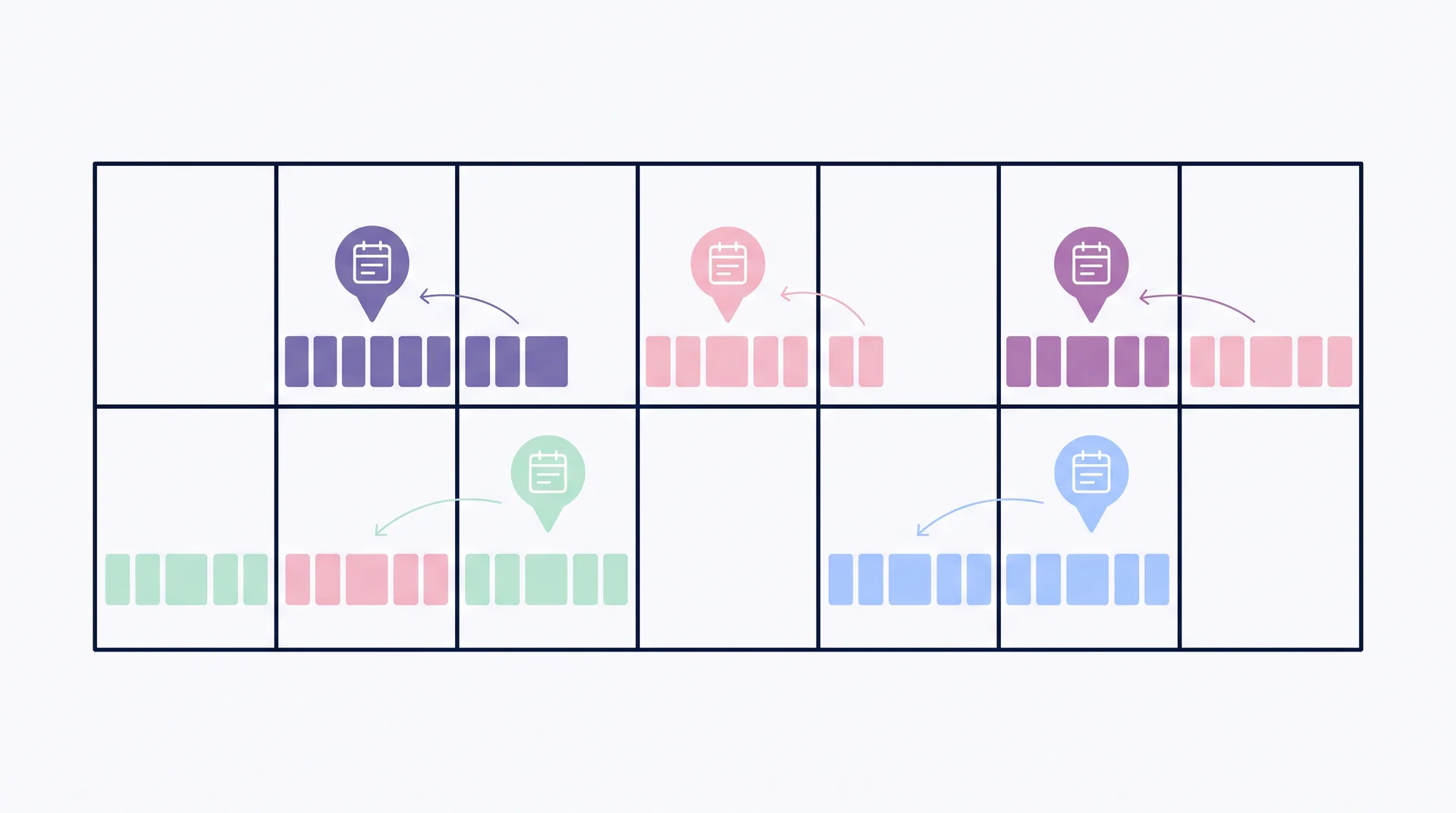
Finals week seems fine until the dates sit next to each other. One exam is Monday, another Thursday, and a paper lands in between. Ultimate Student Planner is a Google Sheets and Excel planner by Cosmo Suite. A Google Sheets and Excel student planner can keep course dates together. The student planner guide starts with those dates and works backward. You don't need a perfect calendar. You need to see which class gets time before each exam.
For a two-week plan, list each exam and fixed commitment first. Split the open study blocks among your courses. Credits can start the estimate; your own sense of difficulty can correct it. The example uses four courses and fictional dates to show one way to do the math. Those hours are assumptions, not a formula or a promise about grades.
The Short List (TL;DR)
- Write down the confirmed dates for all four exams.
- Work backward from the last exam and place study blocks before each one.
- Use credits and your own difficulty rating as a starting point for time.
- Leave open space so a missed block or changed date can fit somewhere.
Start With the Exam Dates, Not a Blank Calendar
Put the exam dates on the calendar before assigning study time. Add class meetings, work shifts, appointments and other fixed commitments too. You'll see the spaces you actually have, instead of planning as if every evening were free.
For each course, check the instructor's syllabus or course site for the confirmed date, format and material covered. Keep those details together. If the date on an old handout differs from the current course site, confirm which one is current before planning around it. A semester and weekly planner setup can help you keep the term dates and this week's work in separate views.
Next, mark the first exam and the last exam. The first one sets your earliest deadline. The last one tells you how far back the schedule needs to reach. If the final is in two weeks, you can spread work over the days you have. If it is closer, keep the same steps but use fewer days.
Iowa State University's Academic Success Center Finals Prep Packet asks students to prioritize finals, identify materials and break study time into a plan. Its suggested calendar begins with what is due and the student's other commitments. That is a practical first step because a study block only works if it fits the week you actually have. The Center's Final Exam Preparation Packet also recommends putting fixed events, meals and sleep into the calendar before filling open time with study blocks.
A Two-Week Finals Study Schedule, Class by Class
Here is one example of how four exams might fit into two weeks. The dates and course details below are fictional. The time estimates show one possible starting allocation, not required study hours. Replace them with your course dates and the time you can protect.
| Course | Credits | Student's difficulty check | Final date | Example planned blocks |
|---|---|---|---|---|
| Biology | 4 | More difficult | Monday, Dec 7 | 4 blocks × 60 minutes |
| Calculus | 4 | More difficult | Thursday, Dec 10 | 4 blocks × 60 minutes |
| History | 3 | Familiar | Monday, Dec 14 | 3 blocks × 60 minutes |
| English | 3 | Familiar | Wednesday, Dec 16 | 3 blocks × 60 minutes |
Worked example: Start at the bottom of the table and move backward. English has the last exam, so its blocks can sit across the two weeks. History is next; schedule its blocks before Dec 14. Biology's exam comes first, so begin those blocks earlier in the window. Calculus falls between Biology and History, which leaves time to prepare before its date without treating the later exams as invisible.
A sample first week could place Biology on Monday and Wednesday, Calculus on Tuesday and Thursday, and English on Friday. The following Monday could hold Biology and History, Tuesday Calculus and English, Wednesday Biology, and Thursday Calculus. In week two, keep the earlier exams in view, then shift more blocks toward History and English after Biology and Calculus are over. This is the schedule's useful check: later exams stay visible while you protect time for the earliest deadline.
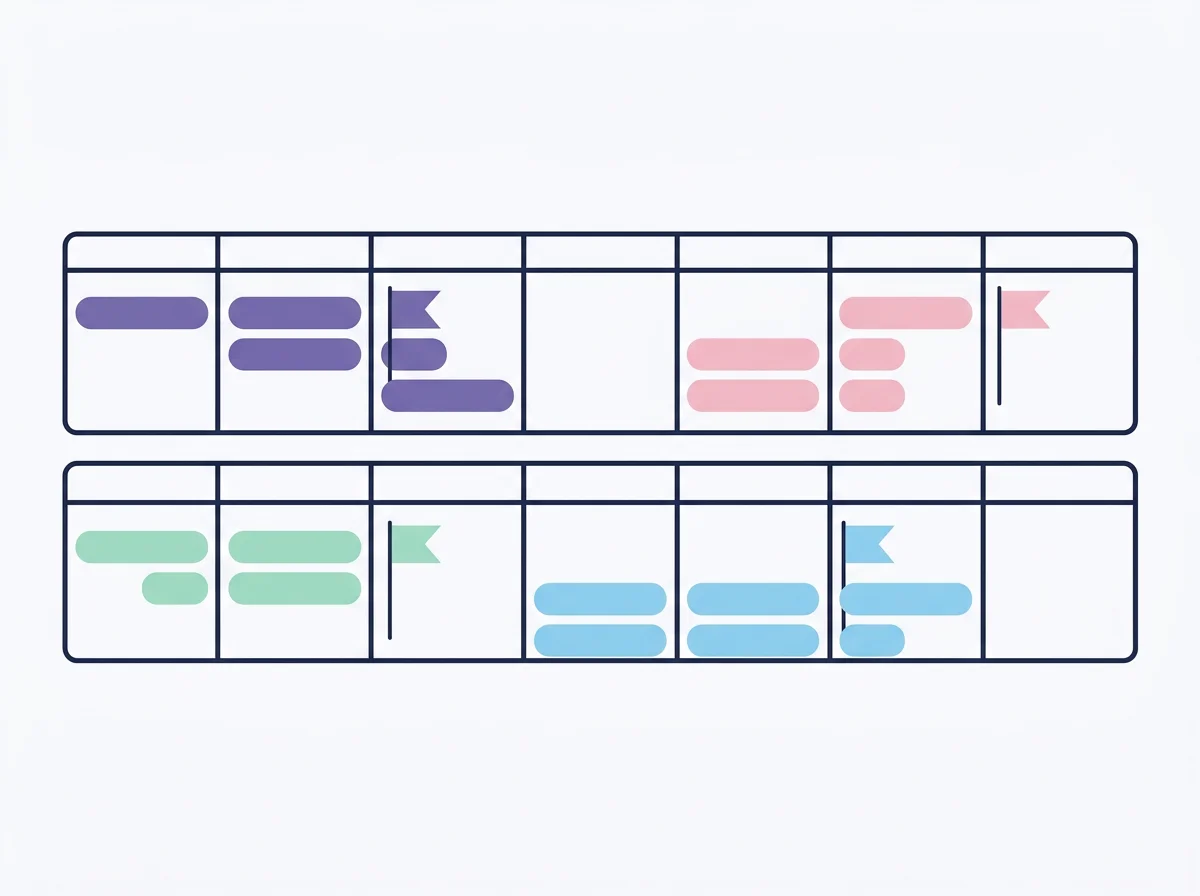
Don't copy these days if your classes or work conflict. The point is to see every exam and give it more than one place in the calendar. Add any paper or project deadline before assigning study blocks. A date you leave off the page can't compete fairly for your time.
How to Divide Time by Credits and Difficulty
Credit weight is a rough way to compare course loads, not a measure of how difficult the material feels or how prepared you are. Use credits to start, then adjust based on your own course work and schedule. A study block is one planned period for a specific course task. A fixed commitment is time you cannot freely move, such as a class, shift or appointment.
One simple way to begin is to list the credits beside each course. In the fictional example, Biology and Calculus each have four credits, while History and English have three. That gives you 14 possible 60-minute blocks if you start with one block per credit. If Biology and Calculus feel harder to this student, they can add one block to each. The result is 16 blocks, spread across 14 days. The numbers demonstrate one choice, not a recommended dose of studying.
Write down why you changed the allocation. “Calculus has more unfamiliar material” is more useful than “Calculus gets more time because math is hard.” You know your classes better than a generic rule does. Check the course outline, recent feedback and upcoming work before deciding what needs another block. For instance, if English has a major paper due before the final, move a block toward that deadline even though the course has fewer credits.
Then compare the plan with the time you have. If your schedule holds 12 realistic study blocks and your first draft needs 18, the draft does not fit. Reduce the number of blocks, shorten some sessions, or start earlier if possible. Do not count sleep, meals, class time or a work shift as open study time.
What to Put in Each Study Block
Give every block a course and a specific piece of work. “Biology” does not tell you where to begin. “Review cell transport notes from weeks 5 and 6” gives you a clear first action and a way to see when the task is complete.
The Learning Scientists' overview of study schedules discusses spacing practice across multiple sessions. It does not give one interval that every student should follow. For this plan, treat the source as a reminder to make more than one appointment with a course when your calendar permits. Choose the task for each block based on your class materials and instructor guidance.
The Iowa State packet also suggests making study tasks concrete and fitting them into a calendar. You can write the course, the material to cover and an estimated time in each slot. If the task is bigger than the block, split it into smaller parts rather than leaving one vague item that takes over the whole week.
When an Exam Date or Your Week Changes
When a date moves, update the source of truth first, then move the study blocks around it. Check the instructor's announcement or official course page, revise the calendar, and look at all four exams again. A change to one course can make another course's preparation window feel different.
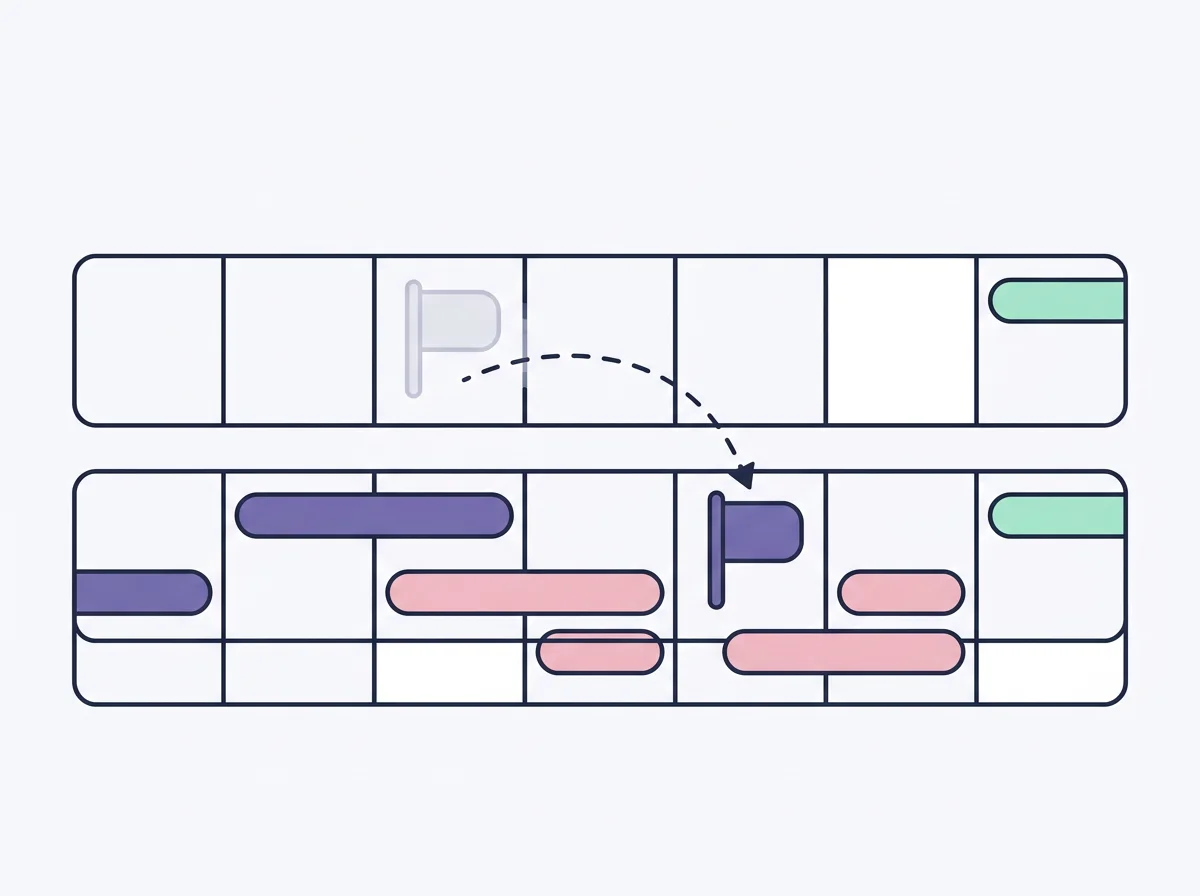
If you miss a block, put its unfinished task into the next open space before the exam. If there is no open space, decide what can be shortened or which task needs help from an instructor, tutor or classmate. Do not stack two long sessions onto a day already filled with class and work just to preserve the original plan.
Keep some blank space in the schedule. That is not wasted time. It gives you a place to move a task when a class runs late, instructions change or a study block takes longer than expected. A schedule that can absorb one change is more useful than a perfect-looking one you cannot follow.
How the Ultimate Student Planner Handles This
The Ultimate Student Planner, a Google Sheets and Excel planner by Cosmo Suite, includes a Study Plan tab with planned versus done time and a “to reschedule” list. You can use it to record what you planned for each course and move unfinished sessions when your week changes. The student planner spreadsheet with a study plan is one option if you want those pieces in the same file as your class and due-date information.
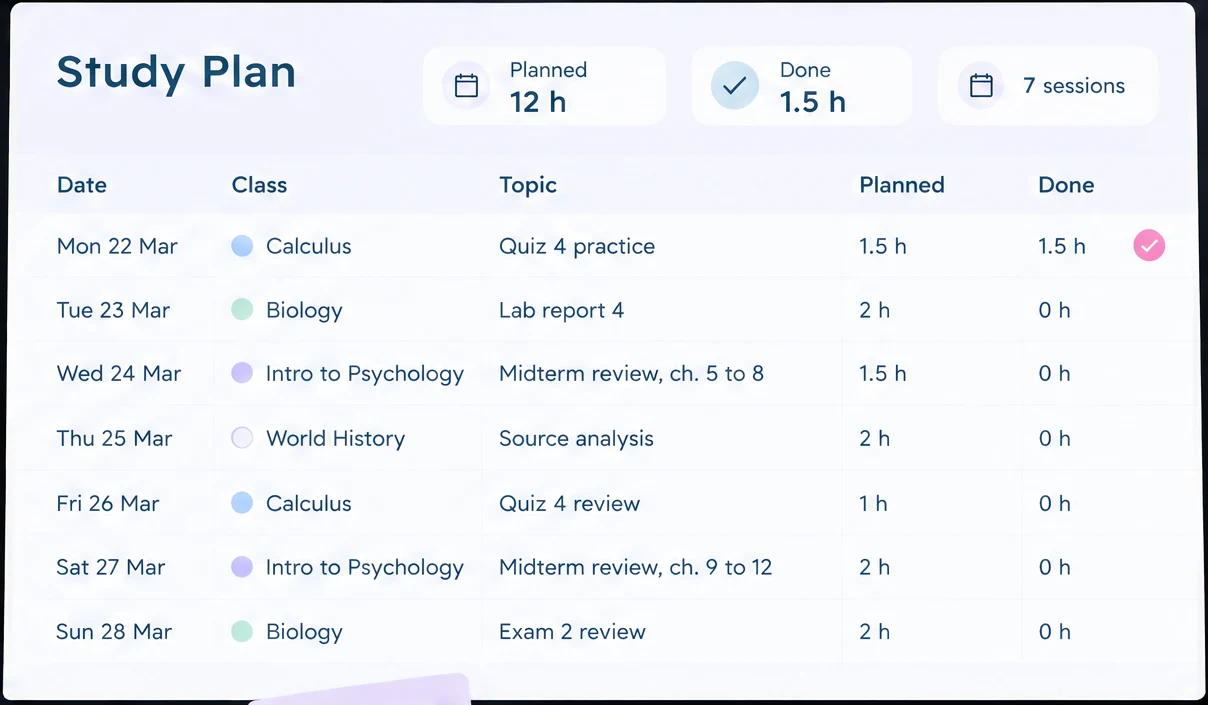
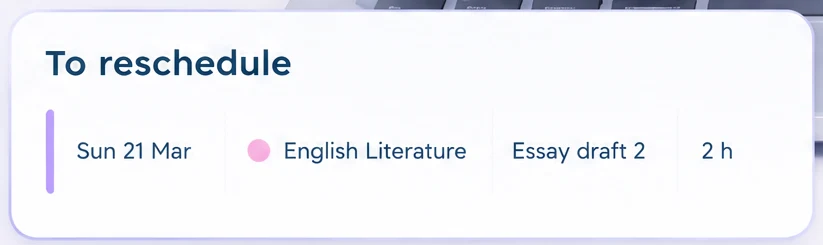
It does not send reminders, sync with a school portal or import exam dates. You still need to confirm each date with your school and enter it yourself. If your current calendar already works, use the schedule above with that. You can also keep course dates and planned study time in one file.
General information, not medical advice.
This article's schedule is an illustrative planning example, not a school-approved timetable. Read the Cosmo Suite editorial policy and contact us with a correction.
Sources checked 22 Oct 2026: Iowa State University Academic Success Center, Finals Prep Packet and Final Exam Preparation Packet; The Learning Scientists, Optimizing Your Learning Schedule.
Frequently asked questions
Does this finals study schedule work for high school?
Yes, the same planning steps work if your school gives you exam dates in advance. Use your actual class schedule and exam calendar, then change the example hours to fit your courses and other commitments. Ask a teacher or counselor if your school has a required study plan.
How many hours should I study each day?
There is no single daily number that fits every student or course. Start with the time you can realistically protect after classes, work, sleep, meals and travel. Divide the remaining blocks across your exams, then adjust when a class needs more attention.
Can I build a finals study schedule in two weeks?
Yes. Start with the exam dates and work backward from the last one. A two-week window gives you places to put course tasks, but it cannot guarantee enough time for every course. If you have less time, use the same steps across the days you have.
What if two finals are on the same day?
Treat both exam dates as fixed. Give each course its own preparation blocks before that day, and avoid planning a long study block between the exams unless your schedule truly allows it. Check the registrar's exam timetable if a conflict appears.
What is the 1/3,5/7 rule in study?
I could not verify a single school-approved 1/3,5/7 schedule in the sources for this article. Check what a source means before using the phrase as a rule. This guide uses your exam dates and available time instead of prescribing that pattern.
Should I schedule every hour?
No. Put in fixed commitments first, then schedule study blocks you can realistically attend. Leave open space for meals, travel, rest and changes. A plan with no room to move can break after one late class or shifted deadline.
What if I miss a study block?
Move the unfinished task to a later open block and check whether it still fits before the exam. If it does not, shorten the task, ask for help, or revise the plan. You do not need to rebuild the whole calendar from the beginning.
Sources
Keep reading
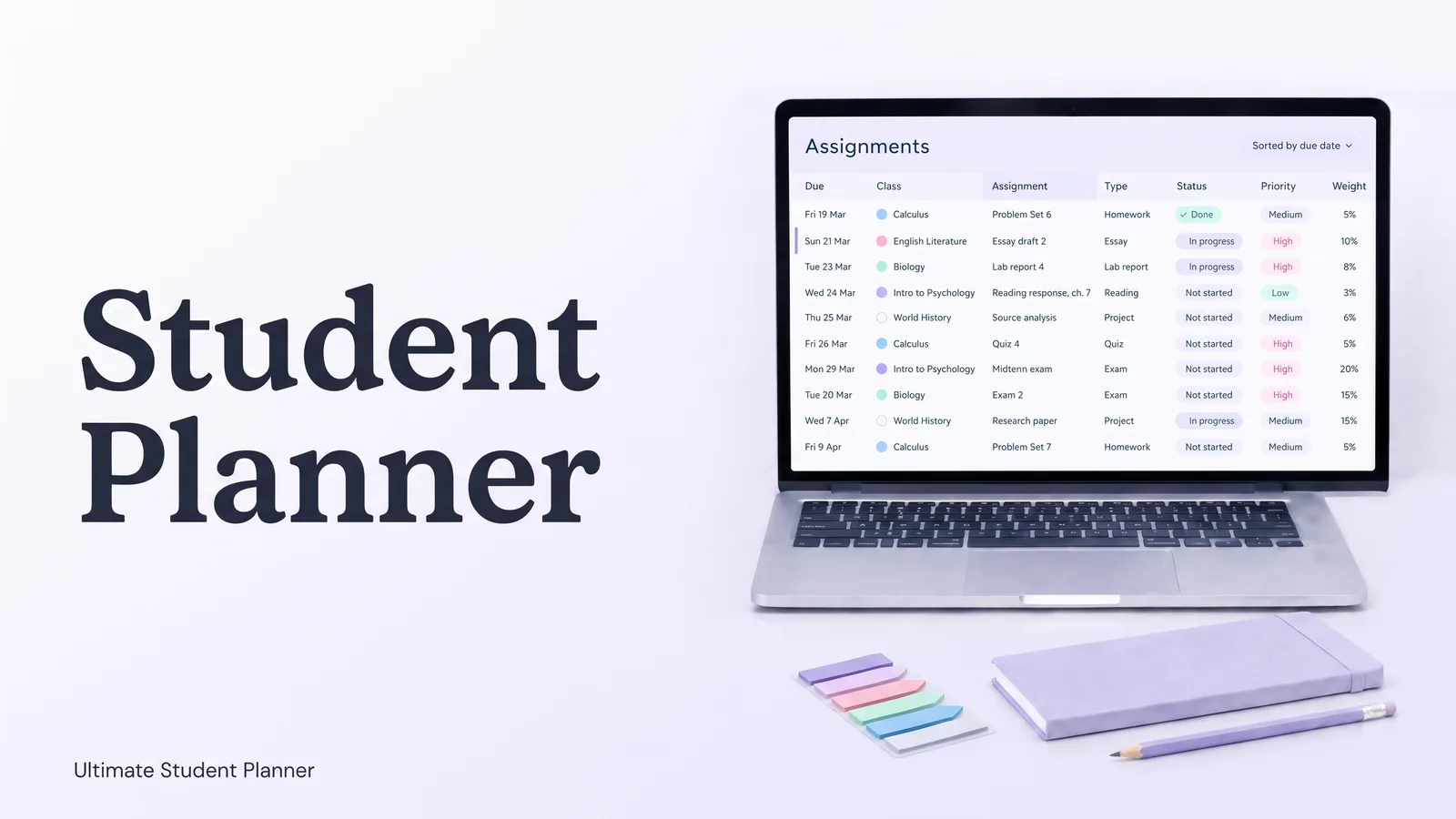
Student Planners
Student Planner: What It Should Hold for Each Class (Paper, App or Spreadsheet)
Student planner setup for one semester: what to keep for each class, how paper, apps and a spreadsheet compare, and a routine to restart after a bad week.
· 10 min read
Student Planners
Student Planner Template: The 9 Parts a Semester Actually Uses
A student planner template with nine parts for class details, due dates, a weekly plan and grades. See how to build a setup you can restart after a missed week.
· 8 min read
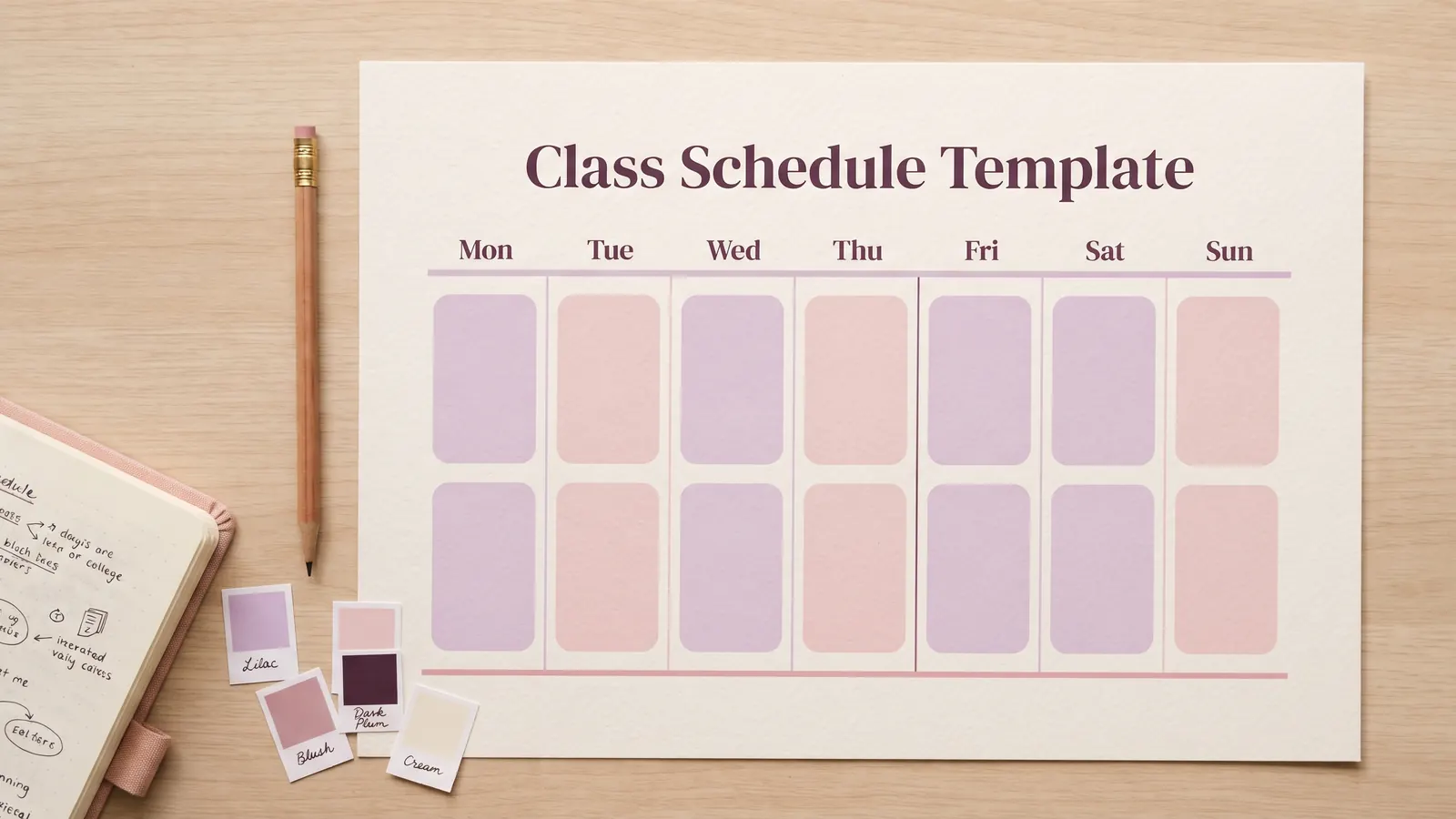
Student Planners
Class Schedule Template: Monday to Sunday, Each Class in Its Colour
class schedule template: organize weekly meetings by day, time, class and room, then see where a spreadsheet fits. Build a clear timetable you can update.
· 7 min read
